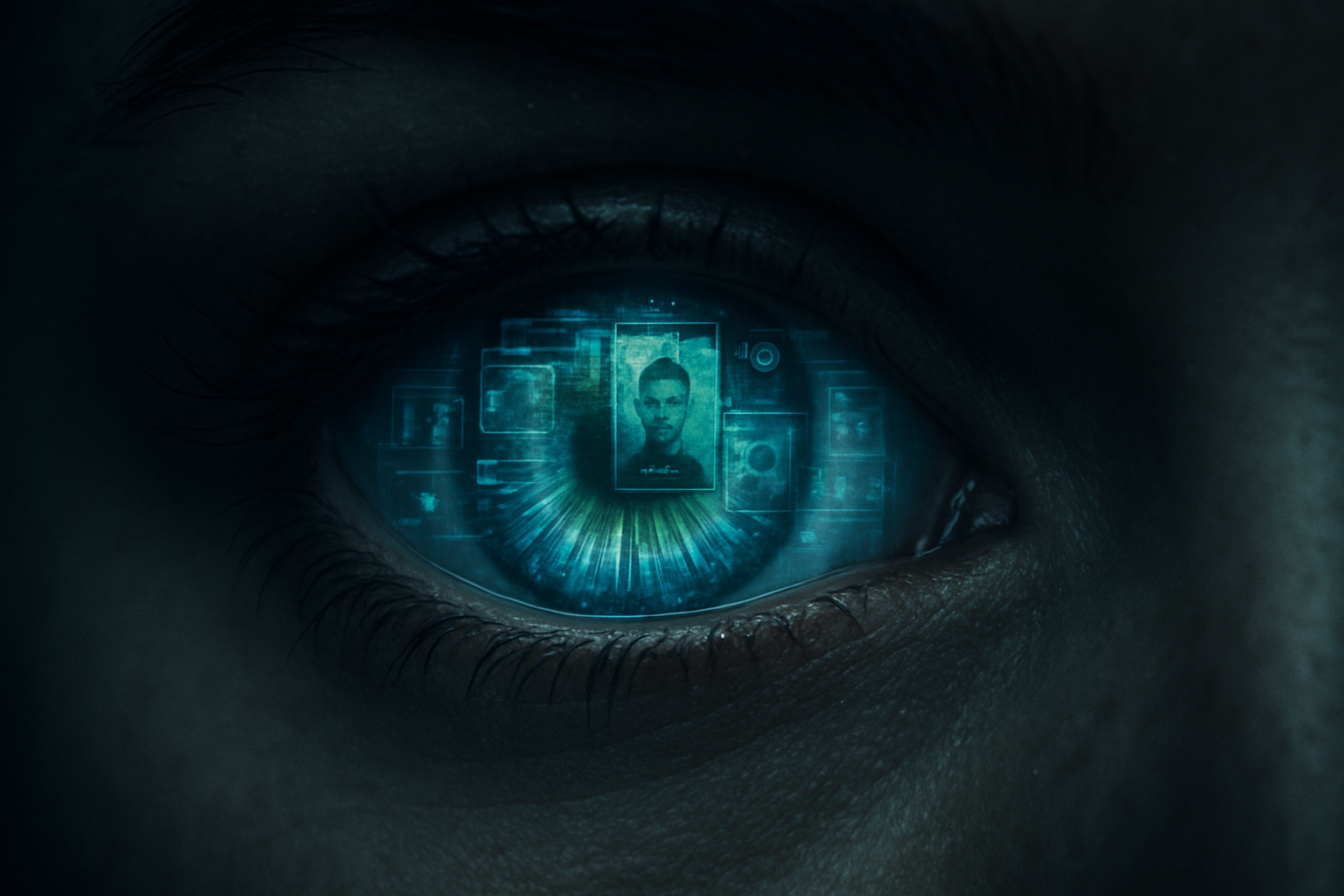
People assume their social media feed reflects their true interests. In reality, it reflects their behavior. The more time you spend watching someone’s posts, stories, reels, or comments, the more the algorithm decides this person is part of your identity. Not because you like them, but because you look at them.

This is how obsession quietly replaces preference.
The Algorithm Doesn’t Know You. It Learns You.
Social platforms don’t measure emotion. They measure time. If you hover over a person’s videos, revisit their page, dig through their comments, or talk about them through DMs, the system interprets every action as a signal that you want more.

The algorithm isn’t judging your intention. It’s only recording your habits.
Human beings have always been shaped by what they repeatedly consume. Technology simply works faster and without any moral filter.
Curiosity Hijacks Your Feed
Most people assume the algorithm rewards what they “like.” It does not. It rewards what they examine. Curiosity is treated the same as enthusiasm. Suspicion is treated the same as support. Even negative attention gets counted as engagement.

Common triggers:
- Clicking on someone’s profile
- Watching their stories to “keep up”
- Reading arguments under their posts
- Sending screenshots to friends
- Searching their name out of habit
You may not enjoy the person at all. You may find them annoying or confusing. The system doesn’t care. You gave them attention. That is enough.
How It Distorts Your Reality
Once the algorithm believes this person belongs in your digital identity, the system begins restructuring your entire feed around them.
You start to think:
- They are more popular than they actually are
- Their lifestyle is the cultural standard
- Everyone is talking about them
- Their relevance is unavoidable

Your perception narrows. You stop seeing the variety you once enjoyed. The platform stops showing your real interests and starts showing your distractions.
This creates a false digital world where one person appears everywhere, even though you never intentionally chose them.
The Brain Mirrors Your Focus the Same Way the Algorithm Does
The Brain Can’t Tell the Difference Between Real or Repeated
Psychology confirms that the human mind responds to repetition more than truth. When you continually think about a person, revisit their page, or replay their posts in your head, your brain treats that focus as meaningful. It builds mental pathways around the thing you return to, even if you don’t want it in your life.

Imagined danger causes real anxiety. Replayed memories trigger real physical reactions. Seeing someone repeatedly online creates familiarity that feels personal. The mind reacts as if the experience is happening directly in front of you.
Selective Attention: The Mind’s Internal Algorithm
Just like social platforms, your brain has its own recommendation system. It highlights whatever you consistently feed it. If you keep checking someone’s content out of habit, curiosity, or emotional attachment, your brain begins treating that person as a priority.

You notice their name more often. You think about them more frequently. You react faster to anything that reminds you of them.
This internal reinforcement mirrors the external pattern created by your digital behavior.
Why This Can Feel Like Manifestation
This is the psychological foundation behind manifestation. It isn’t supernatural. It’s mechanical.
Focus becomes repetition. Repetition becomes perception. Perception shapes behavior.

When you pay attention to something long enough, your internal and external worlds begin reflecting it back to you. The algorithm does it digitally. The mind does it neurologically. Neither system can tell the difference between fascination, worry, or discomfort. They only track what you repeatedly feed them.
The Mental and Digital Loops Sync Together
Once your brain begins recognizing this person as mentally “important,” the platform reinforces that belief by showing you more of their content. Your reaction to the content strengthens the neural pattern. Together, they create a loop where focus turns into relevance, and relevance turns into presence.

You end up living inside an environment—online and in your own thoughts—that you never consciously chose.
A Modern Parallel to Old Surveillance
During the Cold War, intelligence agencies learned that prolonged observation influenced the observer. The same psychological bind appears in social media. Watching someone online creates an emotional connection that grows regardless of your intention.

Your watching becomes data. Your data becomes content. Your content becomes your environment. You shape your feed without realizing it.
How to Take Your Feed Back
You can reset your algorithm by being intentional rather than reactive.
Steps that work:
- Stop visiting profiles that drain you or distract you
- Search for creators who align with your real values
- Mark posts as “Not Interested”
- Follow accounts that inspire growth
- Limit doomscrolling and emotional checking
- Break the habit of re-visiting certain names
Think of your feed as a garden. You decide what grows. If you stop pulling weeds, they take over.
If you don’t curate your algorithm, it will curate you.
SIDEBAR: FACT FILE
FACT FILE
- TikTok, Instagram, and YouTube rank watch time as the strongest form of engagement.
- Research shows negative fixation trains algorithms faster than passive likes.
- Recommendation systems cannot read emotion; they only track patterns.
- Repeated exposure builds familiarity, increasing perceived relevance.
- Even brief daily check-ins with the same person can shift an entire feed.

Conclusion: Your Feed Is a Mirror, Not a Window
Your social media feed does not reflect the world. It reflects your attention. When you fixate on someone intentionally or by accident, you elevate them inside your digital universe. The system simply responds to what you do most.
If you want a feed that aligns with your real interests, values, and identity, reclaim your attention. Your algorithm will follow.
You must be logged in to post a comment.