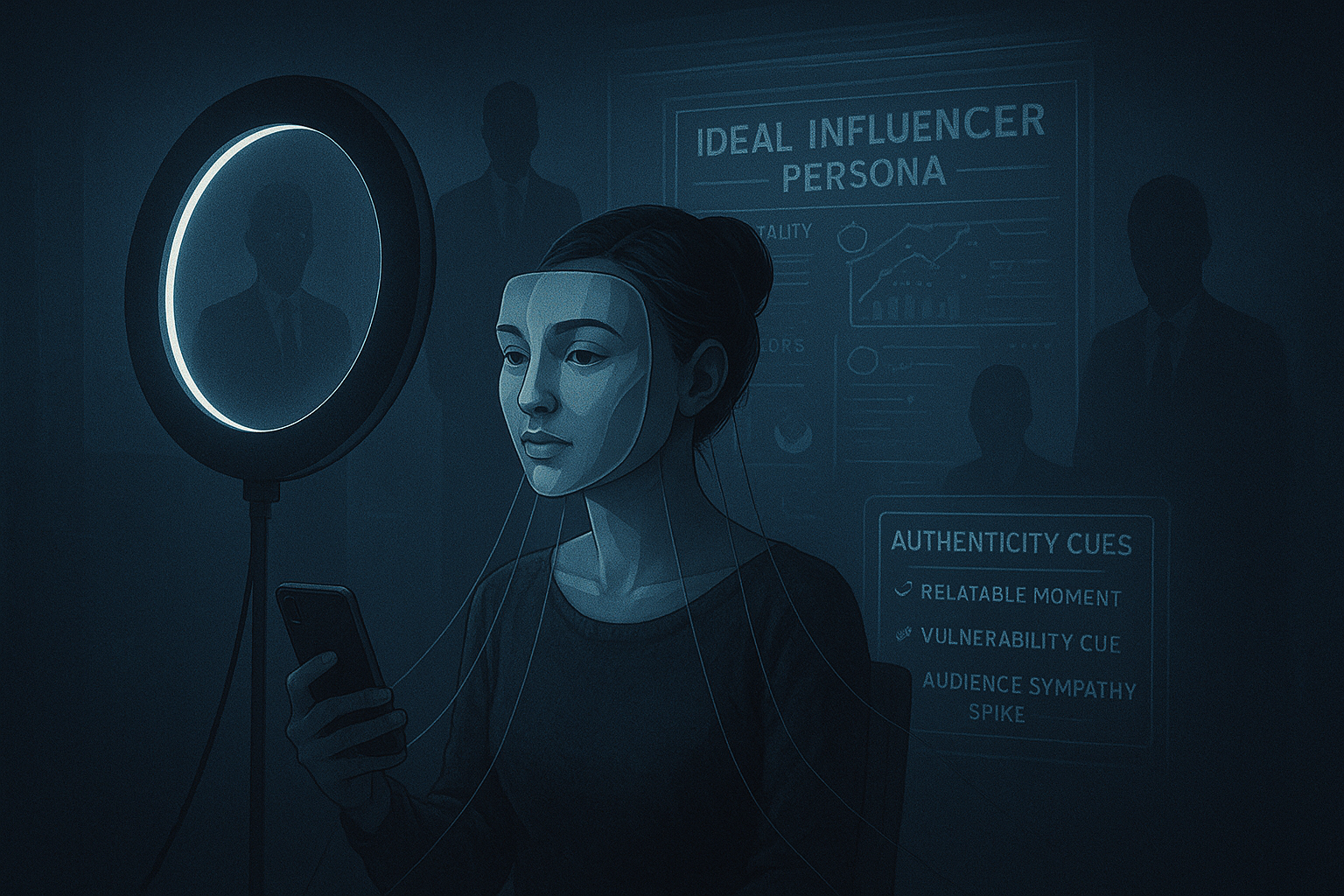
Part I: You think you’re following a person, but the internet is following you through them.
Every influencer starts the same way: a phone, a smile, a moment of confidence. That’s the bait. What comes next is the trap—quiet, polished, and disguised as opportunity.
Influencer culture sells the fantasy of independence. The dream is simple: be yourself, post consistently, and one day the algorithm will crown you.

But once a creator’s following grows past a certain threshold, the system stops looking at them as entertainers. It starts seeing them as tools—psychological assets capable of nudging millions of people with a single post.
Most influencers never notice the shift. That’s the point. The transformation is subtle, almost gentle, and it begins with the construction of a persona.
The Manufactured “Self”
Influencers love to preach authenticity, yet their authenticity is the most engineered part of their brand. PR teams study their audience and adjust personality traits like toggles. Managers rewrite captions to hit emotional pressure points. Agencies craft a “relatable identity” that tests well with data analytics.
By the time the persona is complete, the influencer isn’t a person anymore. They’re a product.

And the industry protects that product with military precision, because influence isn’t about creativity—it’s about control. The more believable the persona, the easier it is to guide people. The more “real” the influencer appears, the more their audience will trust every word that comes out of their mouth.
That trust becomes currency. And currency becomes leverage.
How Creators Become High-Value Assets
The system loves a predictable influencer. It loves even more when that influencer attracts emotionally attached followers.
Brands see loyalty as a resource. Political strategists see it as a shortcut. Shadow investors see it as soft power.

By this point, the influencer’s persona is no longer their own. It’s curated through contracts, deliverables, and image management. Their vulnerability is scripted. Their “raw moments” are often rehearsed. Their mistakes are edited into redemption arcs crafted by people who know that relatability sells better than perfection.
And when the audience falls for it, the system wins. Because the influencer has become exactly what they were groomed to be: a trusted messenger.
The Invisible Hand Behind the Persona
This part stays hidden from the public eye: influencers are quietly overseen by people with far more power than followers ever realize.
Handlers. PR fixers. Shadow investors who fund creators not because they believe in them, but because they believe in their influence. These figures shape content from behind the scenes—what to say, what not to say, when to speak up, when to stay silent.

Some influencers know. Most don’t. And that’s the beauty of the trap: it doesn’t require the influencer to be aware of their own role. All it requires is obedience disguised as opportunity.
Why This Matters
Because once you understand the persona trap, you understand the entire machine.
The influencer isn’t the threat. The people whispering behind them are. The persona is just the mask.

The real agenda sits in the contracts, the payouts, the partnerships, and the forces shaping creators into ideal conduits for persuasion.
What looks like entertainment is a psychological operation with a smile filter. What looks harmless becomes weaponized.
This is the foundation. This is how the trap is built.
You must be logged in to post a comment.