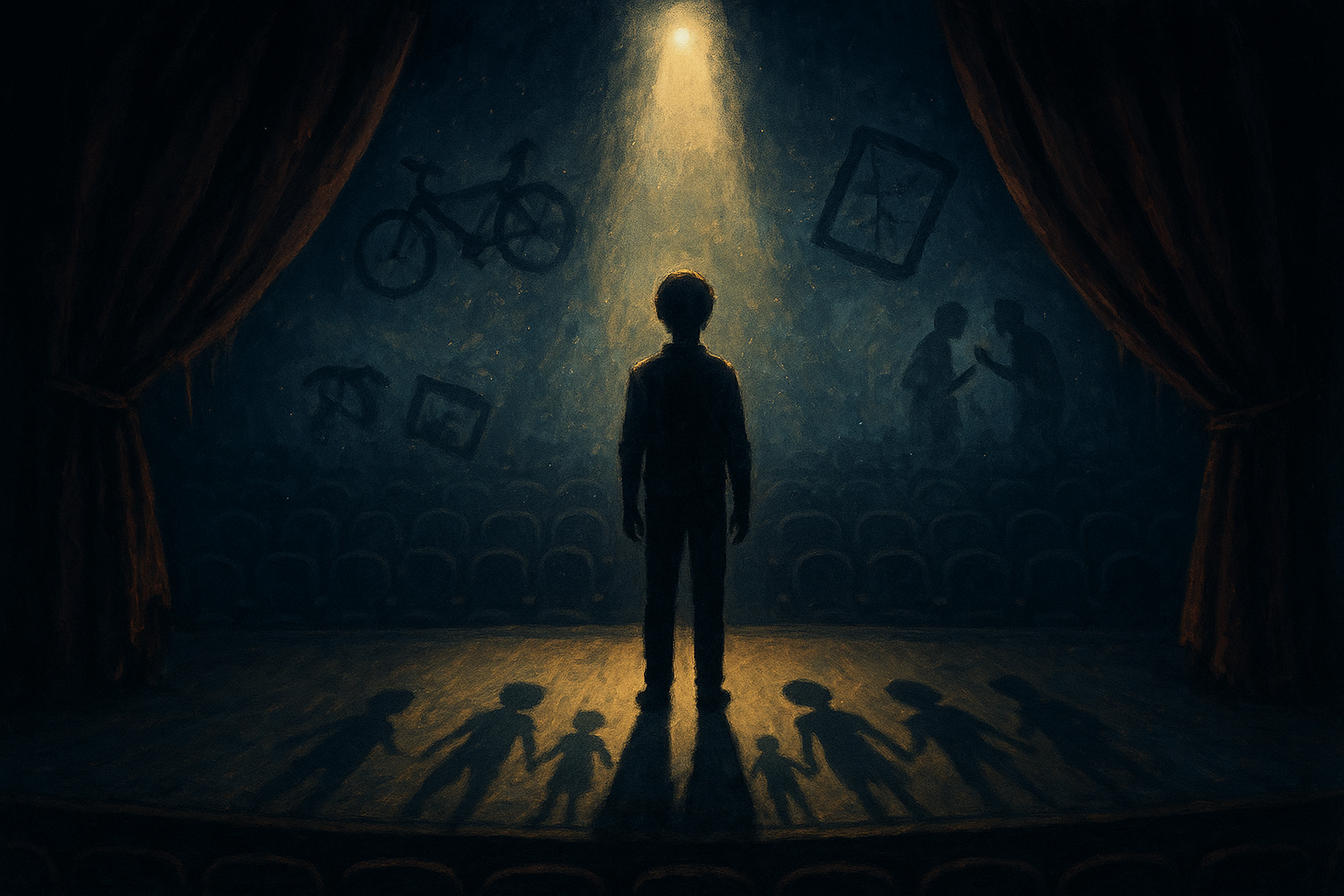
Fame promises healing, validation, and power but for many who grew up in chaos, it becomes another stage where unhealed wounds perform themselves.
Hollywood loves a good origin story. Not the glossy scripts we see on-screen, but the real-life tales whispered in interviews, memoirs, documentaries, and press cycles: the absent parent, the addiction in the family, the chaos that shaped the child who would one day become a star.

These stories repeat with uncanny consistency, hinting at a deeper psychological connection between adversity and the pursuit of fame. And the industry, built on storytelling and spectacle, is perfectly designed to turn these wounds into a marketable commodity.
The Psychology Behind the Pursuit
Many entertainers come from homes marked by neglect, instability, or emotional turbulence. Early wounds don’t simply vanish; they shape the very motivations that drive a person toward attention, admiration, and performance. For those who were unseen as children, fame becomes a tool for validation. The stage offers millions of eyes, applause, and recognition the kind of affirmation missing in their formative years.

Survival skills learned in chaotic households — hyper-attunement to moods, people-pleasing, and emotional shapeshifting — translate seamlessly into charisma and stage presence. Acting becomes more than a career; it’s a form of escape. For someone whose real life felt unsafe, stepping into roles and building a celebrity persona is a form of control that childhood never allowed. Creativity becomes a vessel for pain. Music, acting, and interviews allow entertainers to articulate what was once unspoken, giving the chaos shape and sometimes even beauty. Fame also hands back a kind of power stripped in youth: influence, financial resources, and narrative agency. For many, this is intoxicating, but it is only temporary relief for deeper wounds.
The Industry That Feeds on Trauma
Hollywood doesn’t just tell stories — it sells them. Child stars and adult celebrities alike operate in high-pressure, unstructured environments. Every success, every misstep, and every emotional breakdown is observed, critiqued, and eventually packaged. Backstories are branding. Pain becomes a storyline. Trauma becomes marketing. The industry thrives on the cycle: the wounded chase validation, the industry profits, and the audience consumes the spectacle.

For many, fame intensifies existing vulnerabilities rather than healing them. Maintaining a flawless public persona while carrying the weight of private trauma creates identity fractures. Those who grew up distrustful of adults find every interaction under the public eye to be suspect. Constant scrutiny amplifies hypervigilance, isolation, and the pressure to perform. Substances, often inherited or learned in the family, become coping mechanisms. And applause, while addictive, never fills the inner void — it only reinforces it.
Why Audiences Are Drawn In
Society is obsessed with these narratives, and not by accident. Stories of struggle and triumph tap into universal truths. The underdog narrative inspires hope. The controlled spectacle of overcoming adversity provides a safe way for audiences to process fear, sadness, and anger. Vulnerability feels authentic in an industry built on illusion. Fans connect to the survival, resilience, and human complexity behind the curated celebrity image.
Marketing the Troubled Past
Hollywood has learned to monetize this connection. Emotional resonance, compelling narrative arcs, and “earned” success stories make troubled pasts irresistible for publicity campaigns. PR teams, interviews, biographies, and social media ensure that the story is available for consumption. When handled carefully, it can humanize the celebrity and generate empathy. When mishandled, it can exploit trauma, manipulate public perception, and commodify pain.

Marketing a celebrity’s suffering is ethically delicate. Continuous exposure to their own trauma can retraumatize the individual, blur the lines between private and public self, and pressure them to maintain a persona long after healing is possible. Misrepresentation can distort audience understanding of mental health and recovery, glorify struggle as a prerequisite for success, and target vulnerable fans seeking hope.
The Dark Reality
Fame rarely heals. It offers validation, attention, and temporary empowerment, but it often amplifies pre-existing wounds. Many who enter the industry seeking control and recognition find themselves caught in a cycle of dependency: their story sells, their pain entertains, and the reward is money and public approval, not the resolution they hoped for.

Celebrity status is a tool the industry wields for profit. True help — healing, therapy, or personal closure is rarely part of the package.
Understanding this dynamic is more than celebrity gossip. It’s a mirror of human psychology, societal obsession with validation, and the power structures of the entertainment industry. Fame doesn’t erase trauma — it simply gives it a bigger stage.
Reflection Sidebar:
Consider how society glorifies overcoming adversity while ignoring the cost of trauma itself.
Ask yourself: are we celebrating resilience or consuming someone else’s pain for entertainment and profit? How much of fame is about survival, and how much is about exploitation?
You must be logged in to post a comment.