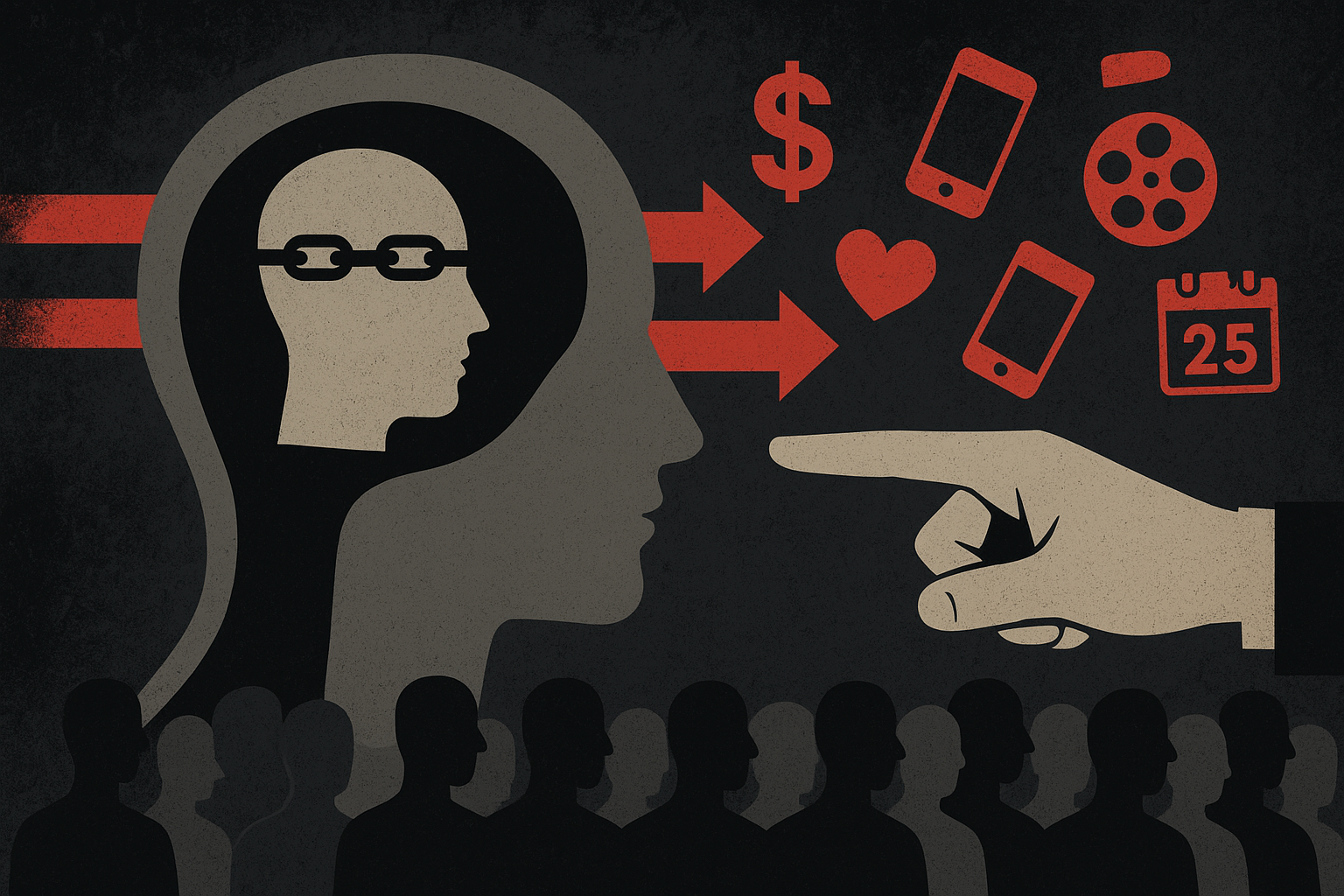
From the moment children enter the classroom, they are not just learning math, history, and grammar skills they are being programmed. Schools were designed not only to teach skills but to shape obedience, normalize authority, and condition minds to accept the world as it is. Over generations, this subtle but pervasive indoctrination has created adults who struggle to think critically, who are easily distracted, and who rarely question the systems failing them.
Education as a Blueprint for Compliance
Modern schooling rewards conformity over curiosity. Standardized tests measure memorization and repetition, not independent thought. Lessons are often presented as unquestionable facts, leaving little room for students to challenge narratives or explore alternative perspectives. History classes gloss over uncomfortable truths, and civics education often frames governments as inherently benevolent, teaching compliance rather than skepticism.

This approach conditions students to accept authority unquestioningly. By the time they leave school, many are primed to seek guidance from those in power, rather than trust their own reasoning. Critical thinking becomes secondary to following instructions, obeying rules, and staying “on track.”
The Lures of Distraction: Materialism, Entertainment, and the Illusion of Freedom
Once indoctrinated, the average adult becomes highly susceptible to distraction. Consumer culture, entertainment, holidays, and relationships offer constant diversions from the underlying issues of society. These distractions serve as pacifiers, keeping attention away from systemic failures.
- Brand loyalty and material possessions create a false sense of identity and achievement.
- Social media fosters superficial validation, rewarding attention over reflection.
- Popular entertainment, holidays, and cultural rituals normalize conformity and distract from systemic injustices.
These diversions are not inherently harmful, but when combined with ingrained obedience, they form a perfect storm that keeps people from questioning who benefits from their labor, attention, and loyalty.
Religion and Racism as Tools of Control
Religion and racial constructs have long been intertwined with indoctrination. Faith can offer comfort and moral guidance, but it is also leveraged to encourage obedience and defer responsibility. Dogmas often discourage questioning authority or established hierarchies. Similarly, racial divisions are perpetuated to fragment communities, keeping collective power weak and distracted while systemic inequalities remain unchallenged.

These forces ensure that attention is divided—toward morality debates, identity conflicts, or symbolic victories while structural issues persist unnoticed. Religion and racism, when co-opted by societal and governmental systems, maintain the cycle of distraction and compliance.
Government, Society, and the Vicious Cycle
The result is predictable. Indoctrinated, distracted, and divided citizens are easier to govern and manipulate. Policies that favor the wealthy or maintain inequities continue with minimal resistance. Meanwhile, ordinary people chase temporary satisfactions—new gadgets, social recognition, entertainment highs without addressing the root causes of systemic failure.

This is the vicious cycle: education conditions obedience, society offers distractions, religion and racism fracture unity, and government exploits the resulting compliance. Meanwhile, generations remain trapped, unaware of how deeply they’ve been shaped to accept the status quo.
Breaking Free: Thinking for Yourself as an Act of Resistance
Breaking the cycle requires awareness. It demands observing the subtle ways schools, culture, religion, and systemic structures shape perception. Questioning history, politics, and authority is not rebellion—it is critical thinking. Seeing past distractions and understanding the mechanisms of control is revolutionary.
To reclaim autonomy, start small:
- Analyze information critically rather than accepting it at face value.
- Question cultural and societal norms, including holidays, rituals, and media narratives.
- Recognize how materialism, entertainment, and social validation shape priorities.
Reflect on how race and religion are used to influence behavior and thought.
Thinking for yourself is not simple, and the process can feel isolating. But independence of thought is the key to resisting manipulation, breaking cycles of failure, and building a society where awareness and accountability replace obedience and distraction.
The system was never designed to empower the individual. Understanding that is the first step toward freeing the mind.
You must be logged in to post a comment.