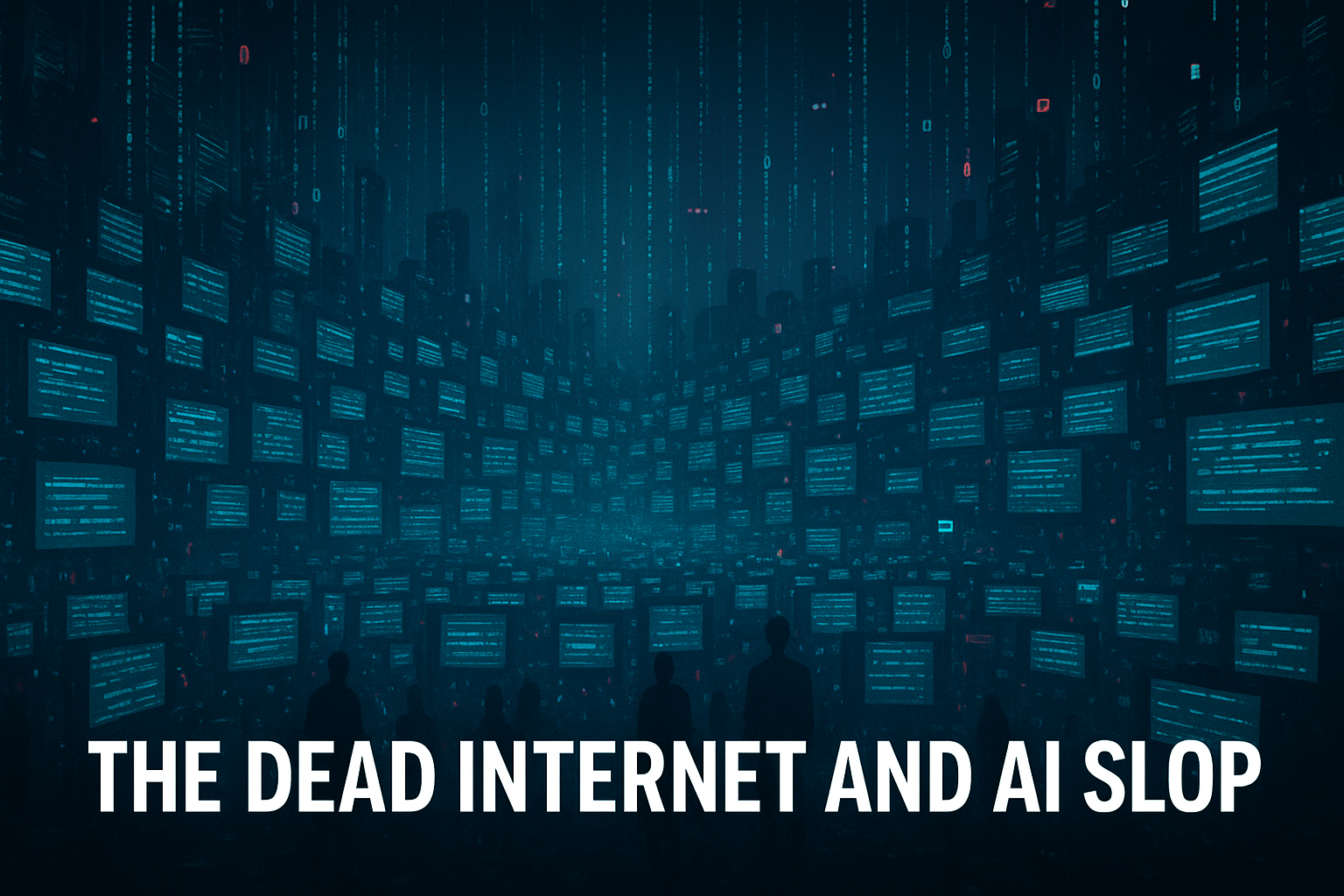
The internet was once a space for curiosity, creativity, and genuine human interaction. Blogs, forums, and early social media thrived on spontaneity and personal connection. Today, much of the digital landscape is engineered to capture attention, maximize engagement, and generate profit.

The Dead Internet Theory argues that around 2016, the web crossed a tipping point. AI-generated content and bot activity began to overwhelm human posts, creating an ecosystem that feels artificial, repetitive, and hollow.
One of the most visible signs of this shift is AI slop low-quality, mass-produced content designed for engagement rather than creativity. From articles and images to videos and music, AI slop floods digital platforms, drowning out authentic human voices.
Understanding the Dead Internet Theory
Proponents of the Dead Internet Theory suggest that humans are no longer the dominant force online. While extreme claims are exaggerated, several trends lend credibility to the idea:
- Bots and AI-generated content increasingly populate social media, forums, and search results.
- Algorithms prioritize engagement over authenticity, amplifying repetitive content and suppressing human originality.
- Echo chambers and filter bubbles isolate users, reinforcing artificial trends and narratives.

Cybersecurity reports in 2024 confirmed that bot traffic surpassed human traffic on the web. Tech leaders like Reddit co-founder Alexis Ohanian and OpenAI CEO Sam Altman have acknowledged the growing presence of AI-driven activity, making the theory feel less like a conspiracy and more like an observable reality.
The Rise of AI Slop
AI slop is digital content produced quickly and cheaply, designed to flood the internet and capture attention. Its presence is felt across all media types.
Text: AI-generated articles and blog posts are often formulaic and repetitive. Fake reviews on e-commerce sites and social media amplify the illusion of engagement. In workplaces, AI produces “workslop” slides, reports, and code that appear polished but lack substance or depth.

Images: Viral AI-generated visuals, like Shrimp Jesus, illustrate how automated content spreads widely. AI often struggles with anatomy, lighting, and consistency, resulting in uncanny or distorted visuals. YouTube thumbnails and other attention-driven images are increasingly mass-produced, optimized for clicks rather than creativity.
Audio and Video: Robotic AI voices narrate videos, creating a flat, unnatural experience. Entire bands or music projects exist solely in AI-generated form, and children’s content sometimes features nonsensical or disturbing animations. These creations exist to exploit autoplay algorithms and maximize engagement.
Why AI Slop Matters
The rise of AI slop has profound consequences for trust, creativity, and information integrity:
- Users struggle to identify authentic content, fostering skepticism and disengagement.
- High-volume AI content dominates feeds and search results, marginalizing human creators.
- Bots and algorithmic amplification accelerate the spread of misinformation.
- Human creators’ work is often exploited as training material for AI, while cheap imitations compete for attention.

Spotting AI Slop
Patterns often reveal AI-generated content:
- Text: Repetitive phrasing, bland tone, formulaic structure, and subtle factual errors.
- Images: Distorted anatomy, inconsistent shadows, garbled text, or unnatural polish.
- Audio/Video: Robotic pacing, unnatural intonation, misaligned lip sync, or stiff movements.
Tools such as GPTZero, Originality.ai, and reverse image searches can help, but human verification remains critical.
Reclaiming Authenticity
Efforts to restore human presence and trust online are emerging. Proof-of-authenticity systems verify content originates from real users. Some platforms prioritize organic interaction over algorithmic engagement. Others explore economic models to restrict automated scraping and AI content flooding.

The Dead Internet Theory and AI slop show that while the internet appears alive, it is increasingly hollow. Automation fills spaces once occupied by humans, and algorithms now dictate what we see, like, and share. Awareness, verification, and a commitment to human creativity are essential to preserve the web as a reflection of humanity.
Suggested Internal Links for WordPress
- The Meme Illusion: How Bots Shape Social Media
- Dark Revelations: Understanding Hidden Systems
- Online The Celebrity Illusion: Automation in Influencer Culture
You must be logged in to post a comment.