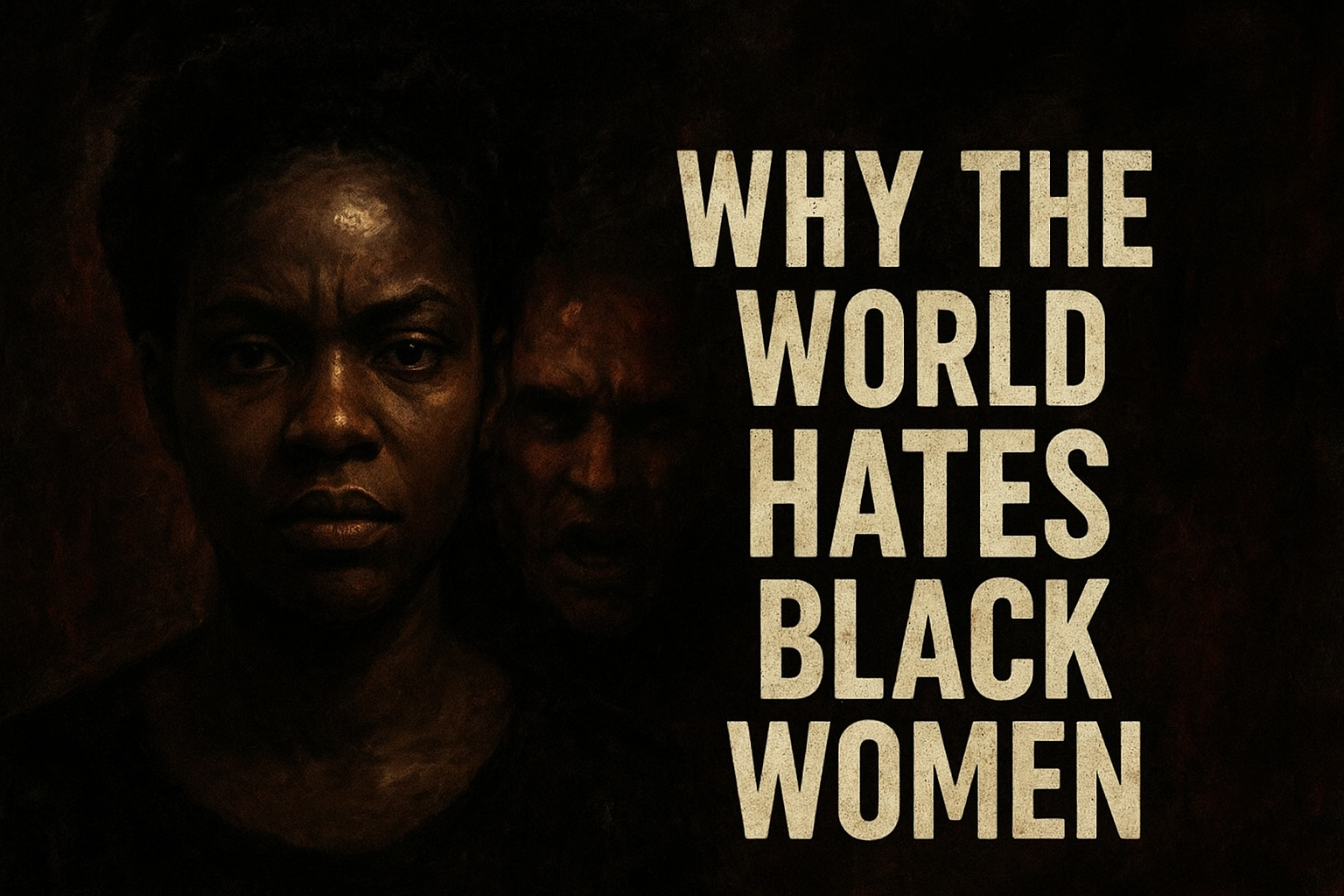

The hatred and prejudice against Black women is not random. It is a structural phenomenon, an intricate combination of anti-Black racism and misogyny that has been meticulously constructed over centuries. Scholar Moya Bailey coined the term misogynoir in 2008 to describe this unique form of oppression, a hatred so specific that it cannot be fully understood through the lens of racism or sexism alone. To grasp the depth of this animosity, we must trace it back to its origin: the era of transatlantic slavery.
The Historical Roots of Hatred
Black women were among the first to experience the cruel intersection of race and gender under chattel slavery. They were treated as property, forced laborers, and breeders, often subjected to systematic sexual assault by white enslavers. Legal and social systems reinforced their dehumanization:
- Property, Not People: Before the 14th Amendment, the courts ruled that Black women could not be raped because they were legally considered property, not human beings.
- 1662 Virginia Law: The statute of partus sequitur ventrem declared that a child inherited the mother’s enslaved status, guaranteeing profit for enslavers and codifying sexual violence into law.

To maintain control, a set of controlling stereotypes was created:
- The Jezebel: Hypersexualized and promiscuous, used to justify sexual assault.
- The Mammy: Asexual, subservient, and devoted, normalizing domestic labor while erasing Black women’s motherhood and humanity.
- The Sapphire/Angry Black Woman: Loud, aggressive, irrational a stereotype originating in minstrel shows, used to dismiss legitimate anger and enforce social obedience.
These narratives were not accidental; they were carefully manufactured tools to justify exploitation
The Modern Legacy of Misogynoir
The hatred that began in slavery did not disappear with abolition it evolved. Today, Black women face systemic discrimination across nearly every sphere:
- Media Representation: The Jezebel, Mammy, and Sapphire tropes persist in film, TV, and online culture, erasing the real experiences and achievements of Black women.
- Healthcare Disparities: Myths about Black women’s “higher pain tolerance” result in alarmingly high maternal mortality rates and inadequate medical care.

- Workplace Inequities: Black women face the largest wage gaps, discrimination in promotions, and penalties for natural hair and appearance.
- Violence and Justice System Neglect: Black women are six times more likely to be murdered than white women, yet their cases often go ignored.
The double burden of race and gender creates a distinct form of oppression. This is intersectionality, the recognition that the oppression of Black women cannot be understood through the lens of gender or race alone.
Global Manifestations

Misogynoir is not confined to the U.S. In former colonial powers, Black women face a similar dual oppression. They are disproportionately targeted with online abuse, scrutinized in sports and politics, and often excluded from social, professional, and cultural recognition. From British MP Diane Abbott to athletes like Caster Semenya, Black women are constantly subjected to attacks that white women and Black men rarely experience.
Psychological Impact
The relentless pressure of systemic hatred creates internalized misogynoir. The “Strong Black Woman” stereotype, while seemingly positive, often harms mental health by imposing expectations of invincibility, emotional suppression, and relentless caregiving. Chronic stress, anxiety, and trauma-related health issues are direct results of living in a society that refuses to value Black women fully.
Why the World Blames Black Women
The societal tendency to blame Black women for systemic problems poverty, family instability, or crime is rooted in centuries of dehumanization. Historical stereotypes persist in modern forms:
- Adultification Bias: Black girls are perceived as older and less innocent than their white peers, increasing their vulnerability to abuse.
- Welfare Queen Stereotype: The myth of the “lazy, manipulative” Black mother erases the systemic economic barriers Black women face.
- Strong Black Woman Trope: Forces Black women to bear extreme emotional, familial, and societal burdens without support, while others evade accountability for systemic failures.

Naming the Enemy: Misogynoir
By naming this unique hatred, Moya Bailey gave Black women a language to describe their oppression and to organize resistance. Misogynoir exposes the systemic, cultural, and psychological mechanisms that sustain anti-Black, anti-woman sentiment. It highlights:
- Persistent media misrepresentation.
- Workplace, healthcare, and legal inequities.
- The intersectional invisibility Black women face in feminist and anti-racist movements.
- The need for structural and institutional change.
Conclusion: Understanding the Depth
Hatred for Black women did not begin with individual prejudice; it was born from centuries of economic exploitation, sexual violence, and systemic control. Its tools stereotypes, laws, and cultural narratives were designed to devalue Black women and justify their mistreatment. Today, misogynoir persists, woven into the very fabric of society, creating measurable disparities in wealth, health, safety, and opportunity.

To confront this hate, we must first acknowledge it. Misogynoir is real, systemic, and global. Its eradication requires deliberate action: cultural accountability, institutional reform, and unwavering recognition of Black women’s humanity, intellect, and power. The world’s obsession with Black women whether to exploit, diminish, or control cannot end until the structures that sustain this hatred are dismantled.
Black women are not problems to be solved—they are truths to be reckoned with. Until society recognizes this, misogynoir will continue to thrive in silence, shadows, and systems.
You must be logged in to post a comment.