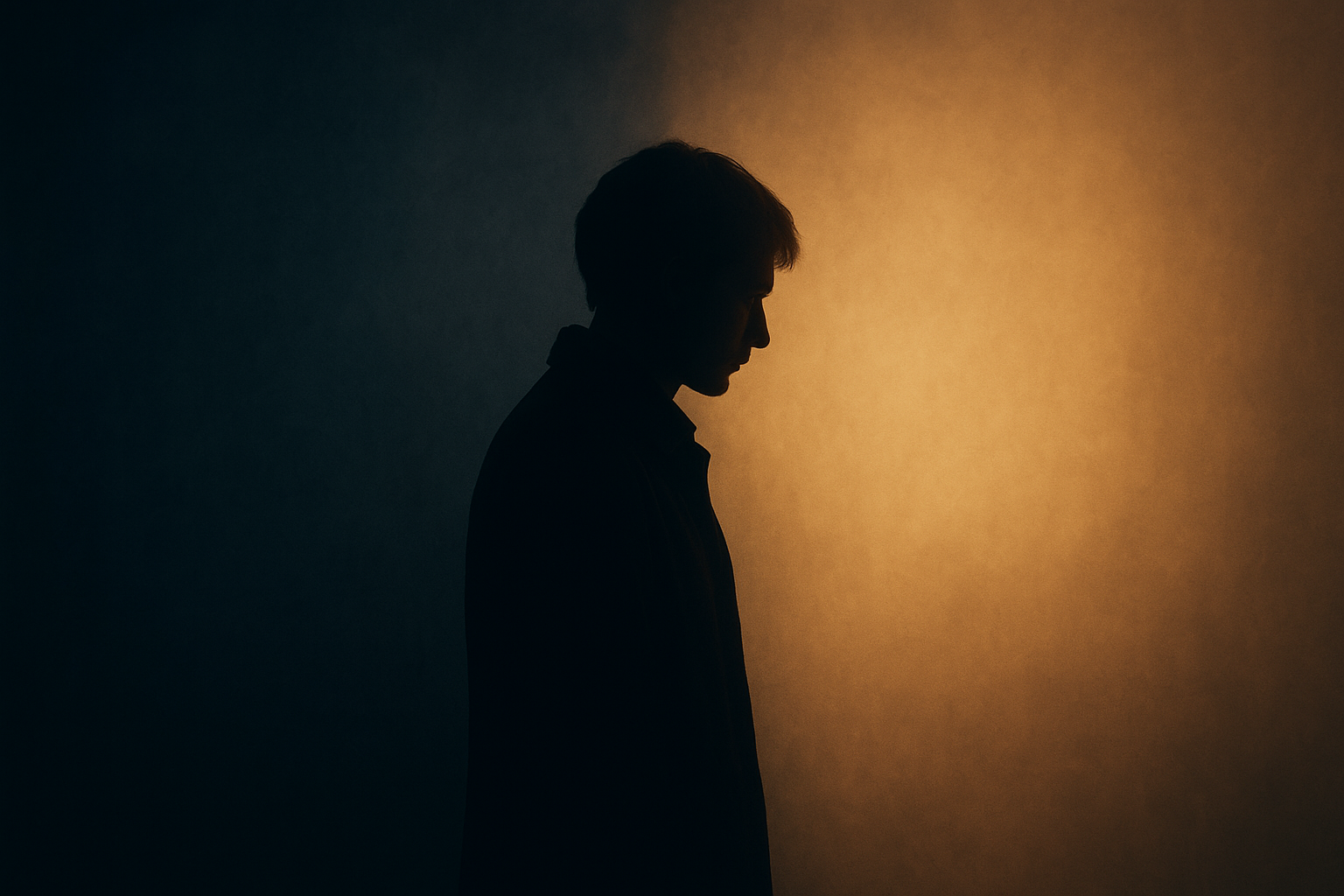
Misanthropy is often misunderstood. It’s not simply the hatred of people it’s a response to disappointment, hypocrisy, and emotional exhaustion. It’s what happens when someone sees too deeply into human behavior and struggles to reconcile that insight with hope. Beneath its cold surface lies something more complex: a form of dark empathy.

Those who withdraw from humanity aren’t always cold they’re often too perceptive. They see the intentions people hide, the contradictions society accepts, and the endless cycles of self-interest that shape our world. That awareness becomes heavy. It turns understanding into fatigue and connection into risk.
The Hidden Depth of Misanthropy
A true misanthrope doesn’t despise humanity from ignorance, but from overexposure. They’ve seen what people are capable of both the beauty and the brutality and they’ve chosen distance as protection. It’s a mindset built on observation, not hatred.

There’s a quiet truth in that distance. Misanthropy becomes a mirror for the world’s contradictions: the desire for truth clashing with the comfort of illusion. It’s a survival mechanism for those who feel too much, think too deeply, and trust too rarely.
The Bridge to Dark Empathy
Here’s where dark empathy enters. Dark empaths also understand human emotion on a deep level, but instead of retreating, they engage sometimes to protect, sometimes to control. They read people effortlessly, sense motives instantly, and understand pain because they’ve lived it. But they use that understanding with precision, not sentimentality.

While the misanthrope steps back to preserve peace, the dark empath steps in to manage chaos. Both responses come from the same root: an emotional intelligence sharpened by pain.
Misanthropy says, “I can’t trust people.”
Dark empathy says, “I understand people too well to be hurt by them.”
Both are defenses built from clarity, not cruelty. Both are emotional strategies for surviving a world that often punishes sincerity.
The Shared Core: Awareness Without Comfort
At the heart of both mindsets lies heightened awareness. The misanthrope sees the flaws in humanity and pulls away; the dark empath sees them and adapts. Each represents a stage in the evolution of emotional survival the moment where empathy becomes too heavy to carry unguarded.

Dark empathy and misanthropy aren’t opposites; they are reflections of the same struggle: the battle between compassion and self-preservation. One chooses distance; the other chooses control. Both are the result of understanding humanity too deeply.
Toward Conscious Empathy
When these two forces withdrawal and discernment find balance, a new form emerges: conscious empathy. It’s the ability to see darkness in people without becoming bitter or manipulative. It’s knowing how fragile trust is, yet choosing awareness over apathy.

The conscious empathic realist walks between both worlds: detached enough to see clearly, yet human enough to still care. They’ve outgrown naïveté but haven’t surrendered their moral compass.
Final Reflection
Misanthropy is not the absence of empathy it’s empathy that’s been burned too many times. Dark empathy is its evolution, learning to navigate emotion with boundaries and precision.
Both remind us that seeing the world clearly can be painful but it can also be powerful. To understand humanity’s flaws and still seek meaning is not cynicism; it’s wisdom earned through endurance.
Because sometimes, to truly care about the world, you first have to step back and see it for what it is.
You must be logged in to post a comment.