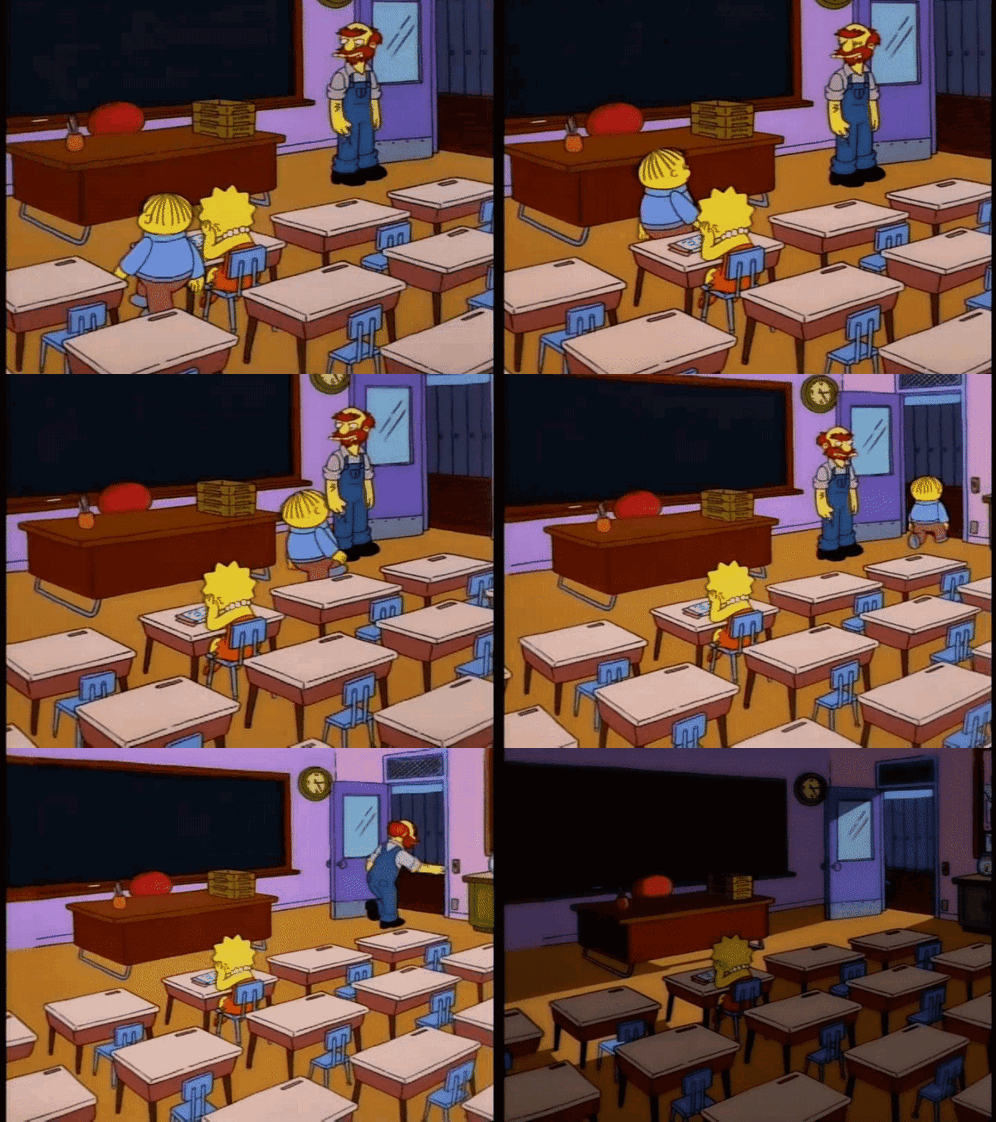
Some people never quite outgrow high school. For some, those years were their glory days, the peak of their social lives. But for others, high school was a battlefield of invisibility years of being overlooked, ignored, or dismissed.

Fast-forward to their late thirties, and many of those same people are suddenly desperate to rewrite the narrative. Not by growing into authenticity, wisdom, or self-acceptance but by seeking validation from a crowd too young to see the performance for what it is.

And that’s where the danger creeps in.
These individuals aren’t simply living life. They’re performing life. Every outfit, every move, every trend carefully borrowed not inspired, but copied from someone who has already paved the way.

They take from the culture, from the originality of others, and parade it as if it were their own creation. Fashion, music, dance, style it doesn’t matter. What’s already been done gets repackaged, filtered, and stamped with their name as if originality could be stolen and repurposed like thrifted clothing.
This is not reinvention. It’s replication.
Words fit for such characters are not flattering:
🚩 Fraud or impostor: Pretending to be something they’re not, performing an identity rather than living one.
🚩 Charlatan: Proclaiming themselves tastemakers, pioneers, or innovators when the truth is hollow.
🚩 Plagiarist: Stealing the work, ideas, and art of others, passing it off as if birthed from their own “vision.”
🚩 Copycat: The gentlest word of them all, but still sharp enough to expose the truth there is no originality here.
What’s troubling isn’t just the theft of creativity, but who they prey upon. These individuals don’t seek validation from their peers the people who might recognize the recycled act. Instead, they reach downward, to the younger generation.

Naïve, impressionable, and eager to worship those who appear confident, bold, and “different,” these young followers rarely recognize the fraud for what it is. They clap, they cheer, they validate. And the cycle of falsehood continues.
But here’s the reality: no amount of borrowed brilliance can fill the void of never having been seen. Validation that comes from deception is fleeting. It crumbles the moment authenticity enters the room. And what’s left behind? An aging echo of someone else’s originality, trapped in a desperate performance that was never truly theirs.

The bigger question remains: At what point does society stop rewarding the impostors and start demanding authenticity again? Because the world doesn’t need another copycat it needs the courage of people brave enough to stand in their own originality, scars and all.
At the end of the day, imitation may earn applause, but authenticity builds legacy. The question is are you chasing validation, or building something real?
Reader’s Journal ✍🏽
1. Have you ever caught yourself imitating someone else for approval instead of showing up as your authentic self? What drove that choice?
2. Why do you think some people chase validation from younger, more impressionable crowds instead of their peers?
3. When you think of originality, who comes to mind and why do they inspire you?
4. What’s the difference between being inspired by someone and copying them? Where’s the line for you?
5. How do you personally guard your originality in a world that constantly rewards trends and replication?
You must be logged in to post a comment.